WatchTheOutdoors
A curated discovery layer over outdoor video: YouTube metadata aggregated into a searchable catalog with a cache-first data strategy, admin channel tooling, and quota-aware scheduled refresh.
- Project
- WatchTheOutdoors.com
- Role
- Founder & Developer
- Timeline
- 2026
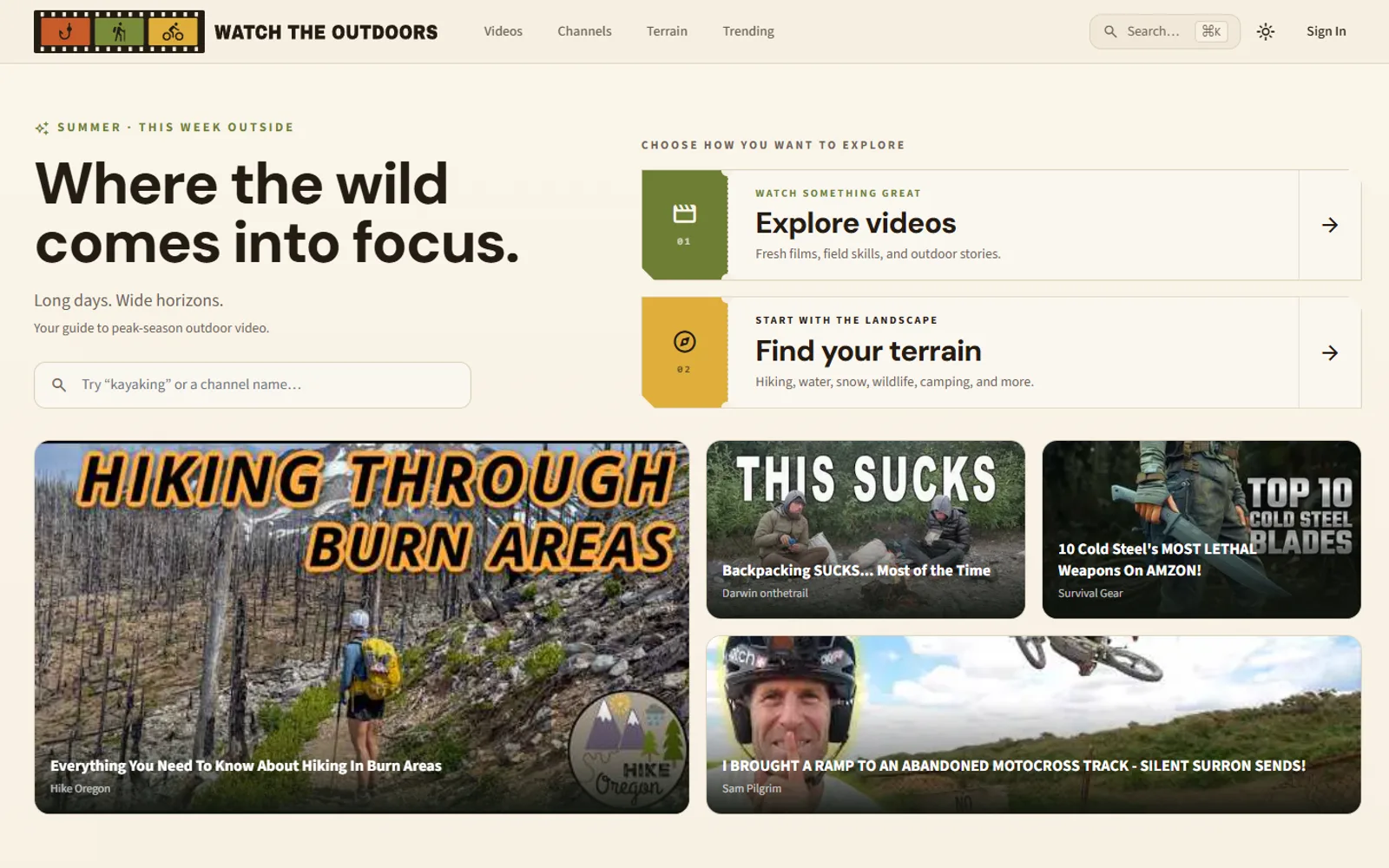
Outdoor video, organized by what you came for
YouTube holds an enormous amount of good outdoor video, and its recommendations chase watch time. Someone looking for content on a specific activity ends up working against an algorithm tuned for something else.
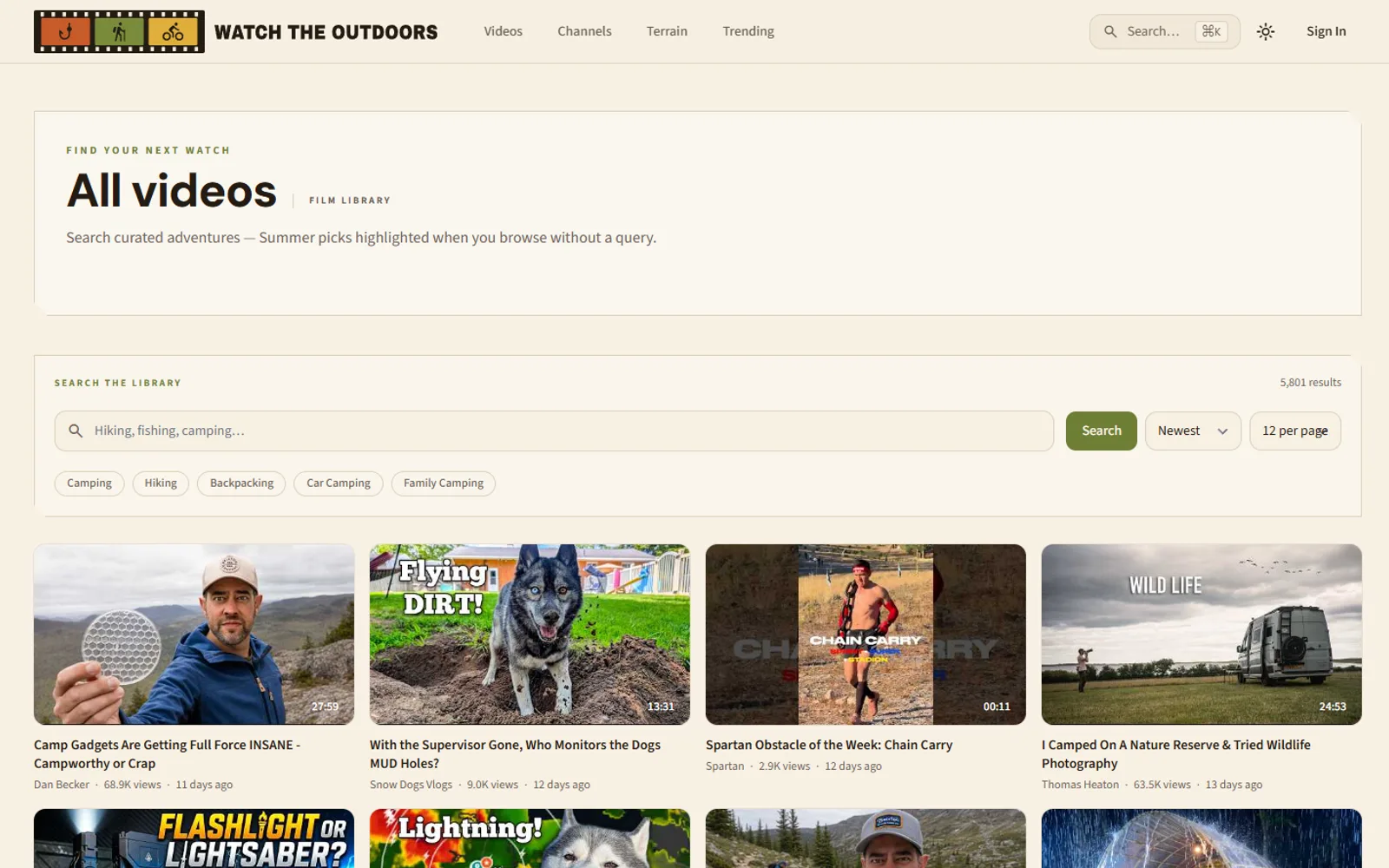
WatchTheOutdoors is a curation and discovery layer over it: metadata from channels worth watching, organized by category and channel, browsable and searchable on its own terms.
Building on a metered API
The YouTube Data API has a hard daily quota, so a product that queries it on every page view runs out and stops working. The architecture is built around serving requests locally.
Reads come from Postgres first, reaching the YouTube API only when the local catalog can’t answer, then writing the result back so the next request is served from the database. Redis caches, BullMQ runs background jobs, and scheduled crons warm the cache and refresh video data away from request paths. The admin tooling monitors quota directly, because on this stack quota is a resource to watch as closely as memory.
The result is a site that stays responsive and keeps working regardless of how much traffic arrives in a day.
What else it does
- Channel scraper for ingesting a channel’s catalog in bulk, with bulk video management
- Browse by category, channel and trending, with search across the catalog
- Video sitemap generation for search visibility on video content
- Anonymous viewing of three videos before sign-in, using Clerk
- A design lab of five complete theme variants — alpine, basecamp, fieldguide, ridge, summit — built to judge visual directions against real content rather than mockups
Where it stands
Live and running on Vercel with scheduled jobs: roughly 250 source files, 51 pages and 35 API routes. The caching and quota architecture is the part worth looking at — it’s the piece that decides whether a product built on someone else’s metered API survives contact with real traffic.
More designed & built work
-
USA Archery (proposal & working demo)
USA Archery Platform Modernization
A working modernization of a national governing body's WordPress site — 2,900+ articles migrated to Payload CMS, a rebuilt information architecture, role-based editorial workflow, and a governed AI assistant with citation-backed answers.
-
TerraGreetings
TerraGreetings
A subscription platform for printable outdoor-themed greeting cards — built end to end with auth, payments, an admin CMS, and a browser-side duplex PDF print engine.
-
KnowledgePeak.ai
KnowledgePeak.ai
An AI documentation generator that puts enterprise knowledge practice within reach of small teams — guided questionnaires produce structured articles, with provider-agnostic LLM routing and admin-configurable templates.
Questions about this work?
Happy to go deeper on any of it — the decisions, the trade-offs, or what I'd do differently.