1800Outdoor
A structured directory of outdoor resources built on a 15-table relational taxonomy, with Postgres full-text search, synonym expansion, and editorial publishing rules that prevent thin pages.
- Project
- 1800Outdoor.com
- Role
- Founder & Developer
- Timeline
- 2026
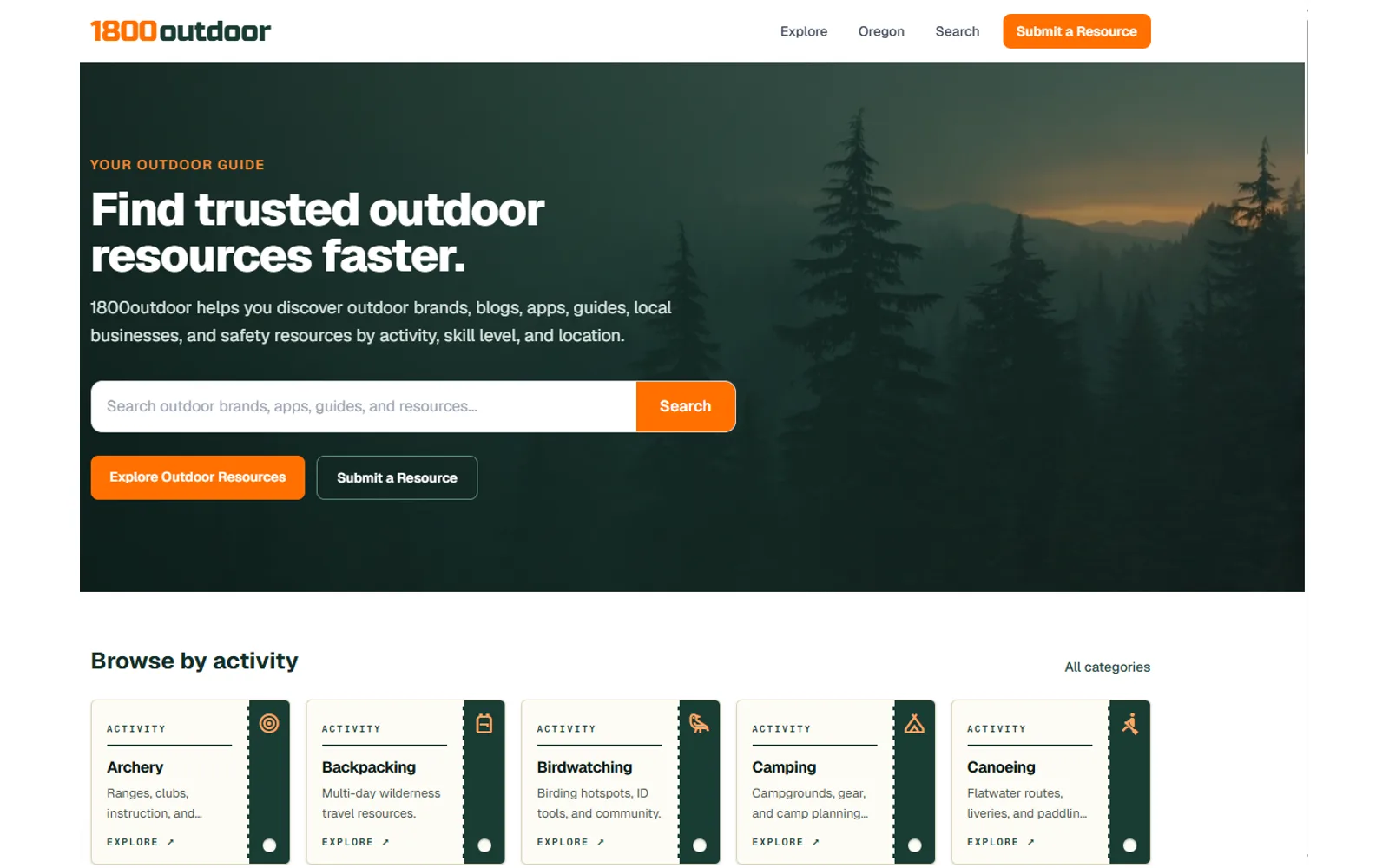
A directory is an information architecture problem
1800Outdoor is a curated directory of outdoor resources — brands, blogs, apps, guides, retailers, local businesses, nonprofits, and government and safety organizations — connected through categories, locations and tags.
Directories look like websites and behave like taxonomies, which is what drew me to building one.
Modeling listings as real relationships
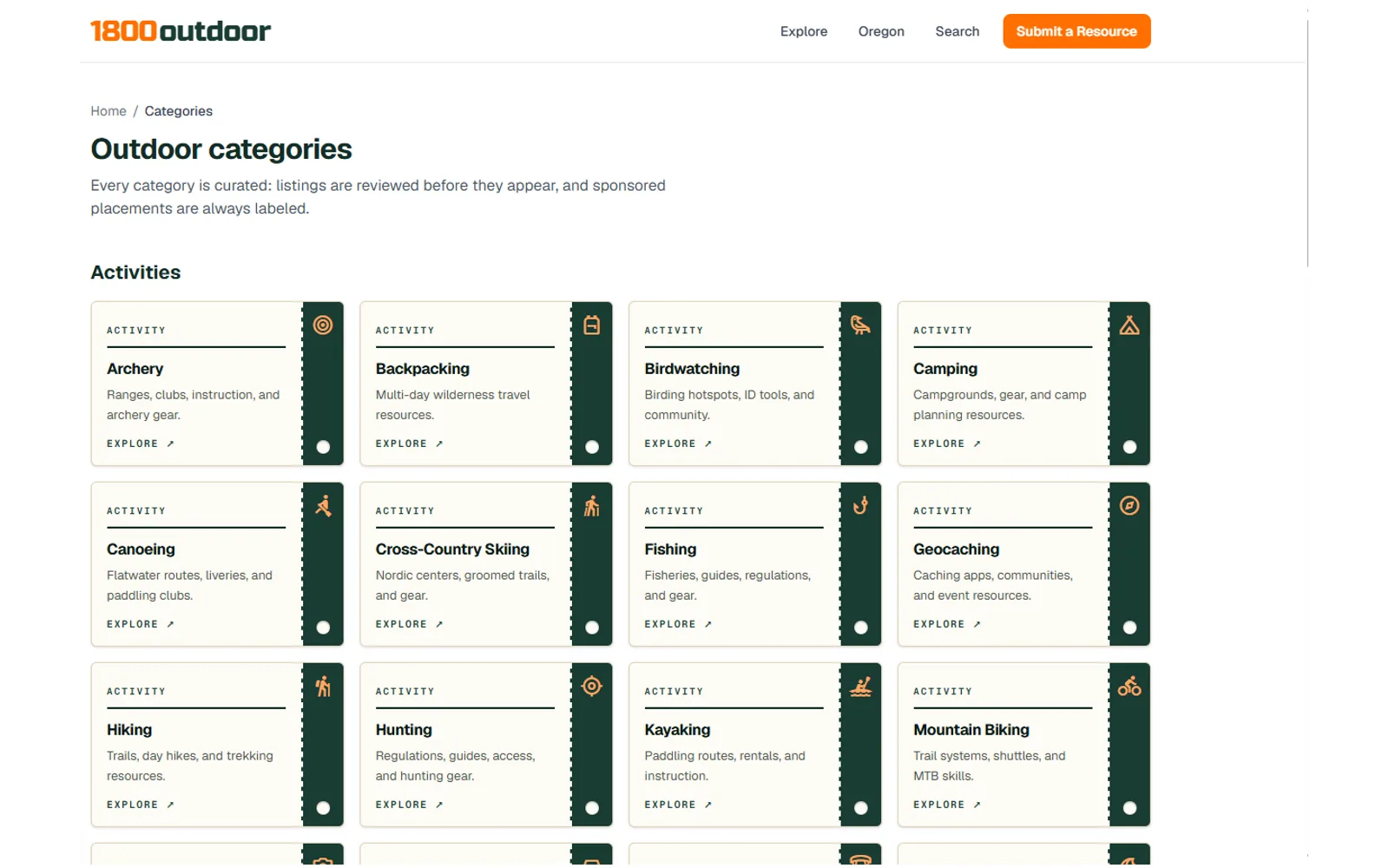
The schema runs to 15 tables, modeling listings against categories, locations and tags as genuine relationships rather than a flat table with a type column. That’s what lets a single listing be reached down several legitimate paths — by category, by place, by tag, or through a curated “best of” page — while existing once.
Content is authored as markdown and imported into the database through a pipeline, so entries stay reviewable as files and queryable as data.
Search that speaks the visitor’s language
Postgres full-text search with synonym expansion is the detail that carries the product. People search in their own words, not the taxonomy’s — someone looking for a “rucksack” should find what’s filed under “backpack.” Expanding query terms against a synonym set is what separates a directory that answers questions from one that works only if you already know its vocabulary.
It’s the same principle as metadata and title work on an enterprise knowledge base: findability belongs to the searcher’s words.
An editorial rule, enforced in code
City pages publish once they have at least five listings.
Thin local pages built for search rankings offer visitors nothing and cost the whole site credibility. Holding pages back until they’re worth landing on keeps the directory’s quality bar in the code rather than in good intentions. The same judgement applies to the site as a whole: the platform is built, and the public domain serves a launching-soon page while the catalog fills out — so the screenshots here show the application running against its seeded catalog.
What’s built
34 pages including per-type detail routes and an admin area for listings, taxonomy, content pages, submissions and claims. Submission and claim flows let listings be proposed and owned. Dynamic OG images and favicons are generated at the edge, and JSON-LD structured data is built per page type. Local development runs against embedded PGlite, so there’s no database to provision to work on it.
Inside the project
2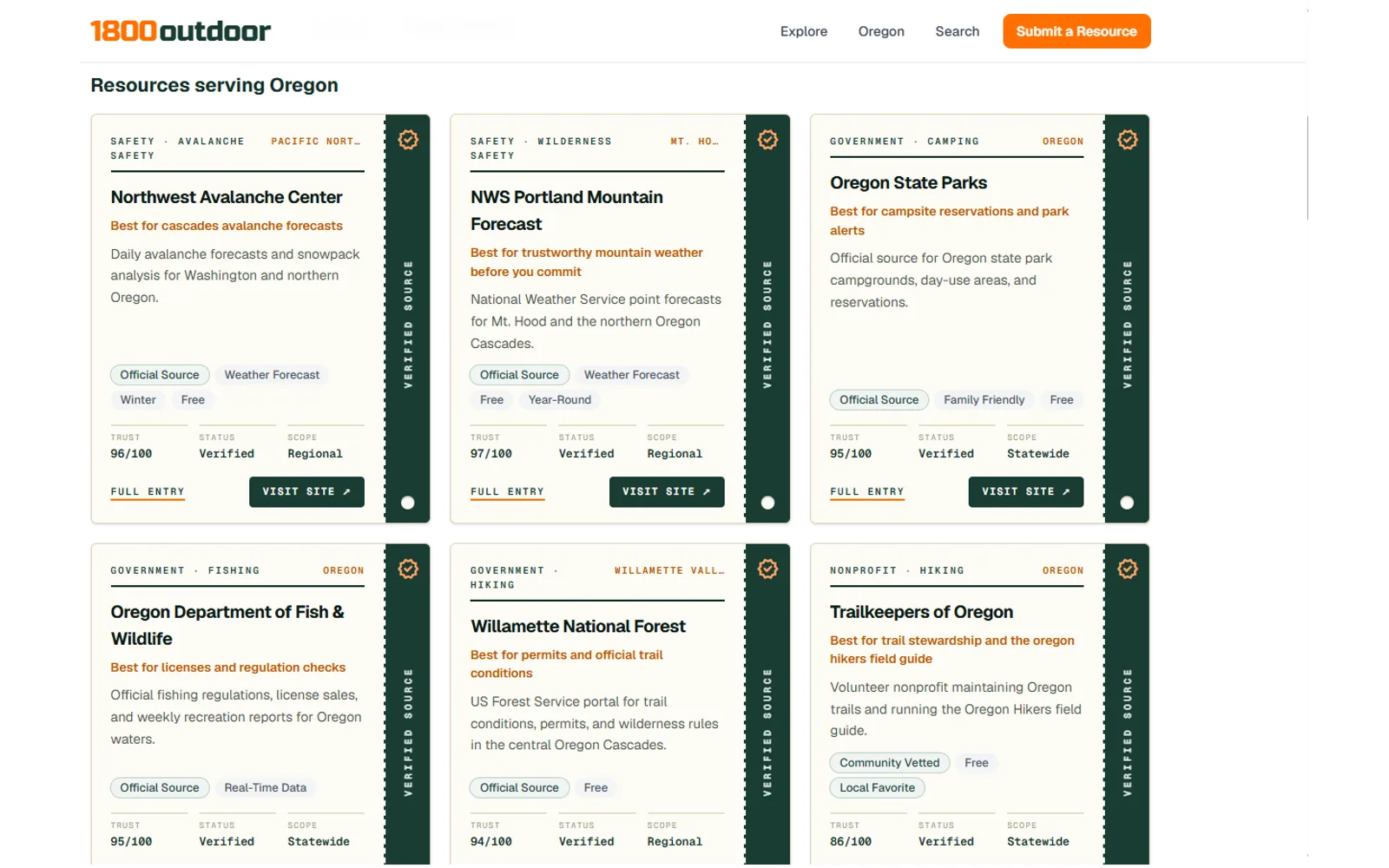
More designed & built work
-
USA Archery (proposal & working demo)
USA Archery Platform Modernization
A working modernization of a national governing body's WordPress site — 2,900+ articles migrated to Payload CMS, a rebuilt information architecture, role-based editorial workflow, and a governed AI assistant with citation-backed answers.
-
TerraGreetings
TerraGreetings
A subscription platform for printable outdoor-themed greeting cards — built end to end with auth, payments, an admin CMS, and a browser-side duplex PDF print engine.
-
KnowledgePeak.ai
KnowledgePeak.ai
An AI documentation generator that puts enterprise knowledge practice within reach of small teams — guided questionnaires produce structured articles, with provider-agnostic LLM routing and admin-configurable templates.
Questions about this work?
Happy to go deeper on any of it — the decisions, the trade-offs, or what I'd do differently.