AtoZ Outdoors
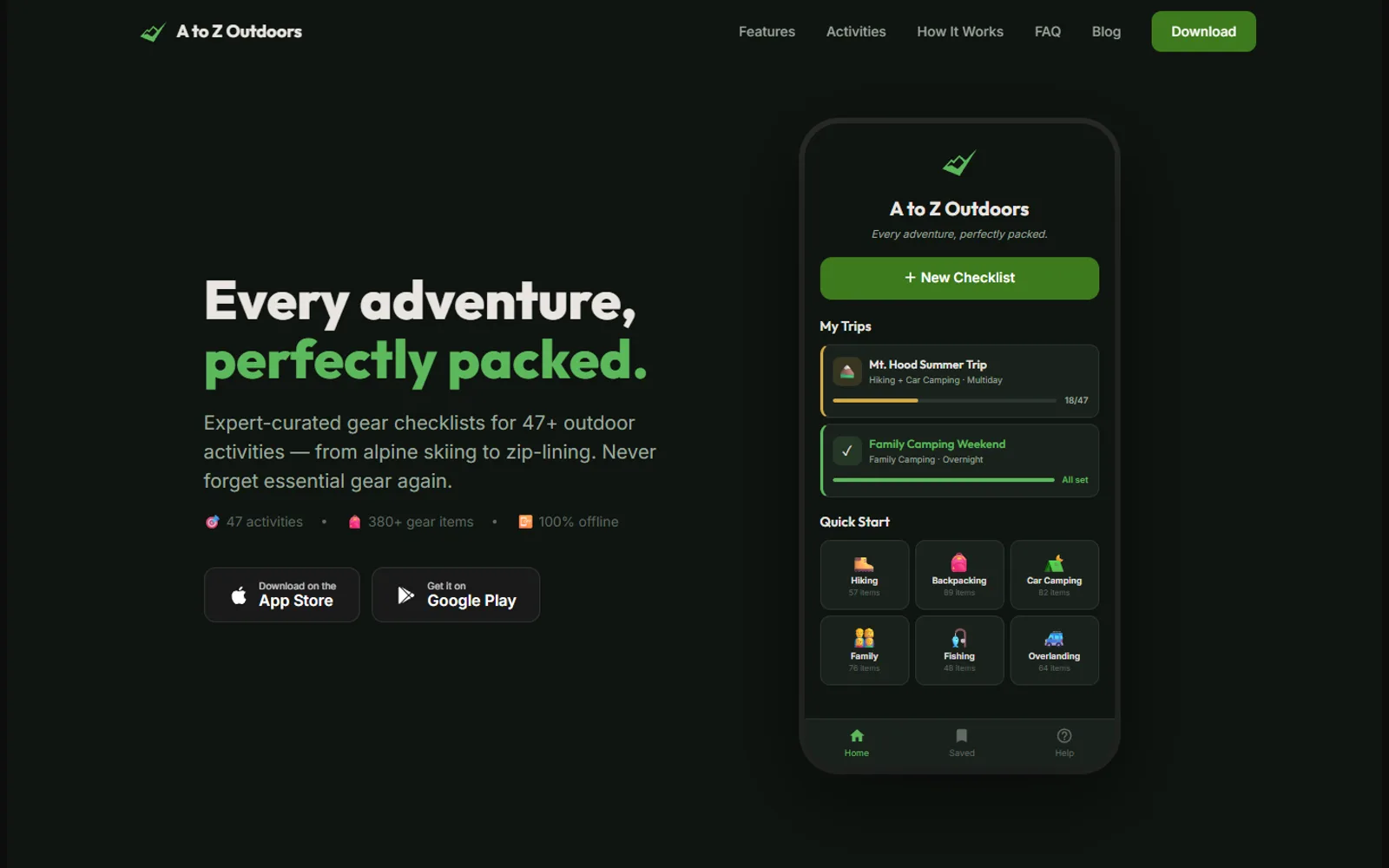
A cross-platform iOS and Android app that builds smart, tiered packing checklists for 47 outdoor activities — fully offline, with a local database and PDF export.
- Project
- AtoZ Outdoors
- Role
- Designer & Developer
- Timeline
- 2026
A packing list built for your actual trip
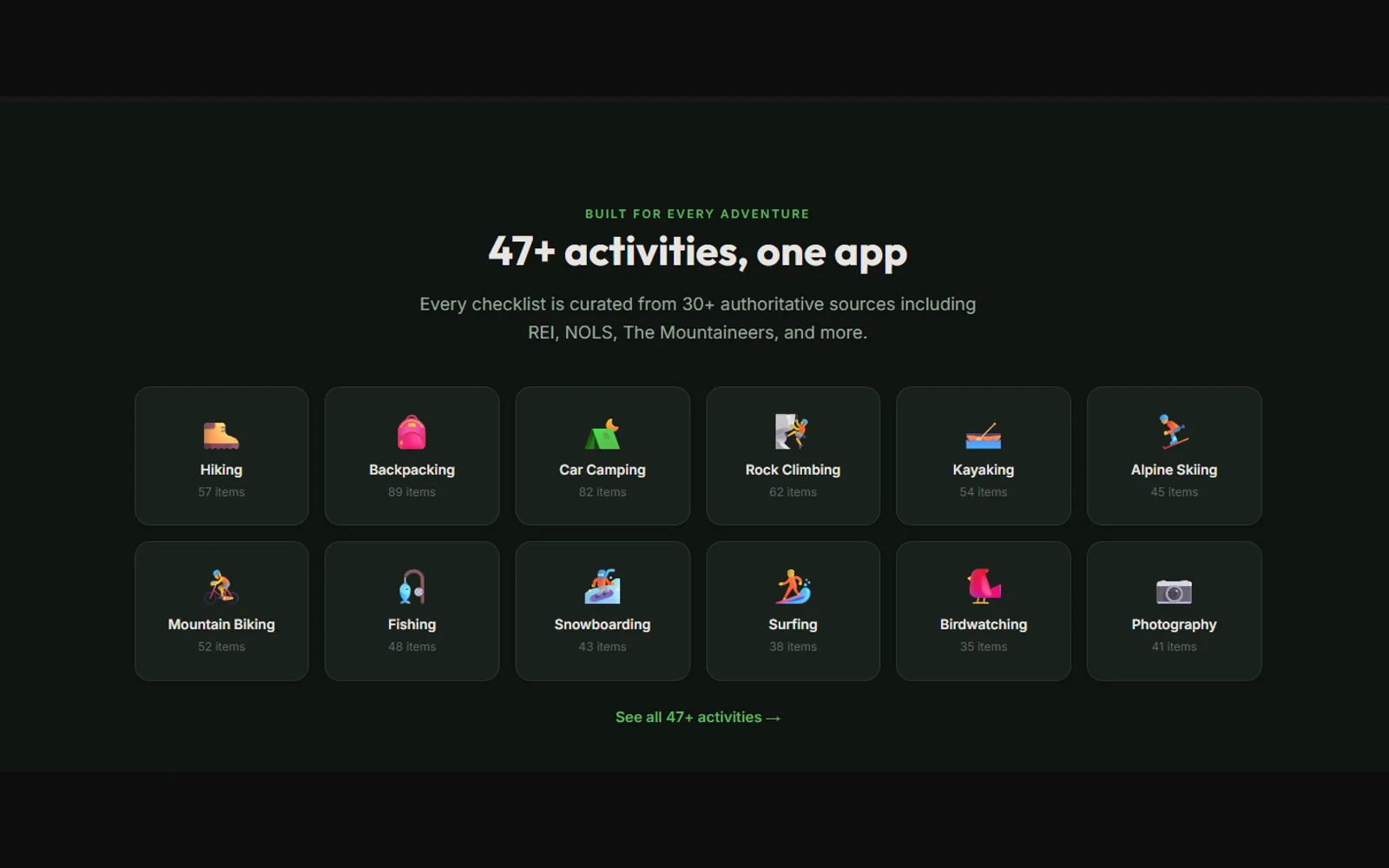
You’re heading somewhere outdoors. The app asks what activity, then the details of the trip, and builds a packing checklist scoped to that situation — across 47 activities and roughly 380 gear items, organized into tiers so the essentials, the optional and the nice-to-have are easy to tell apart.
Then it works with no signal, which is exactly when you need it.
Offline-first, by design
That constraint shaped everything. A packing app gets used at the trailhead, in the campground, in the truck at 6 a.m. — places where connectivity is thin or absent. So the whole app runs on the device.
It ships with a seeded SQLite database and does all its work locally. Checklists, activities, gear data, saved lists and preferences live on the phone, so it opens instantly, works anywhere, and keeps the user’s trips private. It also means no server to run or pay for, which for a single-developer app is the difference between shipping and not.
Design decisions
Gear tiers instead of flat lists. Sixty undifferentiated items help nobody. Tiering by necessity lets a beginner pack the essentials and an experienced user scan for what they forgot, from the same list.
Trip details drive the output. The checklist is generated from the activity plus the specifics, rather than pulled from a static template.
Twelve in-app help articles, written as content and bundled as markdown — covering how the smart checklists work, gear tiers, printing, offline behavior and privacy. Old habits from documentation work: if a feature needs explaining, explain it in place.
PDF export and printing, because plenty of people want the checklist on paper in a pocket while the phone’s battery gets saved for the map.
How it’s built
Flutter targeting iOS and Android from one codebase, with Provider handling state across activities, checklists, trips and preferences. Seven screens, a responsive theme layer covering phone and tablet, and icon and splash configuration completed for both stores.
The app is built and running on both platforms, with store submission as the next step.
Inside the project
2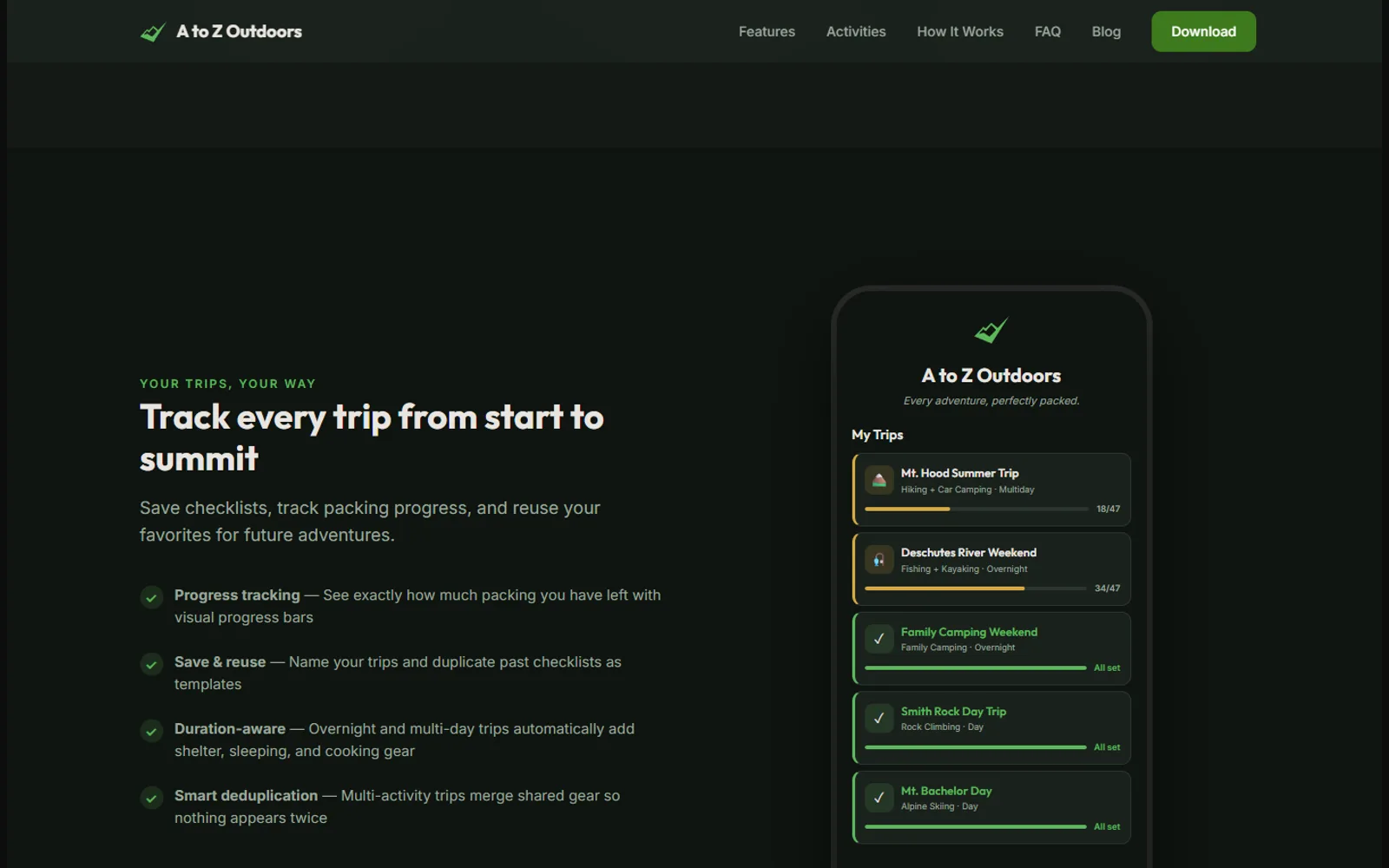
More designed & built work
-
USA Archery (proposal & working demo)
USA Archery Platform Modernization
A working modernization of a national governing body's WordPress site — 2,900+ articles migrated to Payload CMS, a rebuilt information architecture, role-based editorial workflow, and a governed AI assistant with citation-backed answers.
-
TerraGreetings
TerraGreetings
A subscription platform for printable outdoor-themed greeting cards — built end to end with auth, payments, an admin CMS, and a browser-side duplex PDF print engine.
-
KnowledgePeak.ai
KnowledgePeak.ai
An AI documentation generator that puts enterprise knowledge practice within reach of small teams — guided questionnaires produce structured articles, with provider-agnostic LLM routing and admin-configurable templates.
Questions about this work?
Happy to go deeper on any of it — the decisions, the trade-offs, or what I'd do differently.