Outdoor Media Network Platform
Designed and launched OutdoorHub.com, a content syndication platform that grew to 21 million monthly users and drove 33% revenue growth.
- Project
- OutdoorHub / Carbon Media Group
- Role
- Director of Web Development
- Timeline
- 2011–2013
- 21M
- Monthly users
- 33%
- Revenue growth
- #1
- Outdoor media network
A scattered audience across a dozen sites
Carbon Media Group owned a collection of outdoor enthusiast sites — hunting, fishing, shooting, conservation — each with its own audience and its own traffic. Apart, they were small publications competing for the same readers. Together they were the largest outdoor audience online, if something could actually connect them.
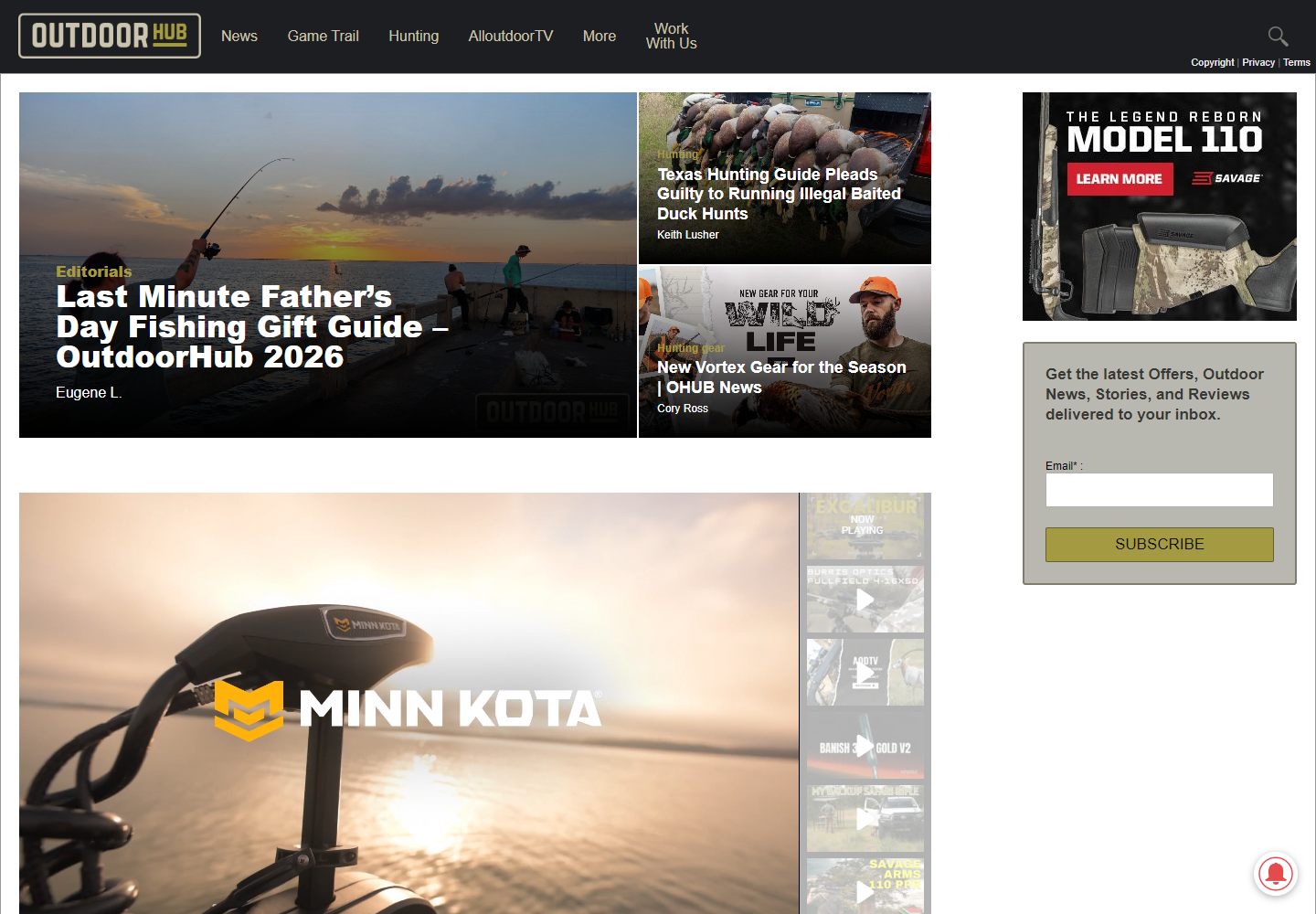
OutdoorHub was that something. I led platform strategy and development as Director of Web Development, building the hub that the network published through.
Building for volume from the start
The platform ran on WordPress with custom CMS development on top, and it was designed around the editorial reality: a growing team publishing constantly, across verticals, with no time for a system that fought them.
That meant defining the editorial workflows first and building the CMS to fit them — how a story gets drafted, reviewed, tagged and published, and who owns each step. Audience segmentation was built into the content model, so a piece could be written once and targeted correctly across the network.
One article, the whole network
The syndication system is what made the economics work. Content published to OutdoorHub distributed automatically across the network of enthusiast sites, so a single story earned traffic on every property that fit it instead of one.
Each site kept its own identity and audience while drawing from shared editorial standards. That multiplied the return on every piece the team produced — the same writing budget, several times the reach.
Findability as the growth engine
Traffic at that scale comes from search, so information architecture and SEO were the growth strategy, not a cleanup task afterward.
I structured the taxonomy and site architecture around how outdoor enthusiasts actually search — by species, season, gear, technique and region — then paired it with content governance so quality held as volume increased. UX improvements focused on the same goal: get a reader from a search result to the thing they wanted, then to the next thing worth reading.
What it produced
- 21 million unique monthly users at peak scale.
- 33% revenue growth in 2013 through the syndication strategy.
- OutdoorHub established as a leading outdoor media network.
- A platform architecture that was reused as the company expanded into additional verticals.
This is where the information architecture work in the rest of my portfolio started. Taxonomy, findability and content governance at 21 million users is the same problem as enterprise knowledge management — a large body of content, and a reader who needs the right piece of it right now.
Questions about this work?
Happy to go deeper on any of it — the decisions, the trade-offs, or what I'd do differently.